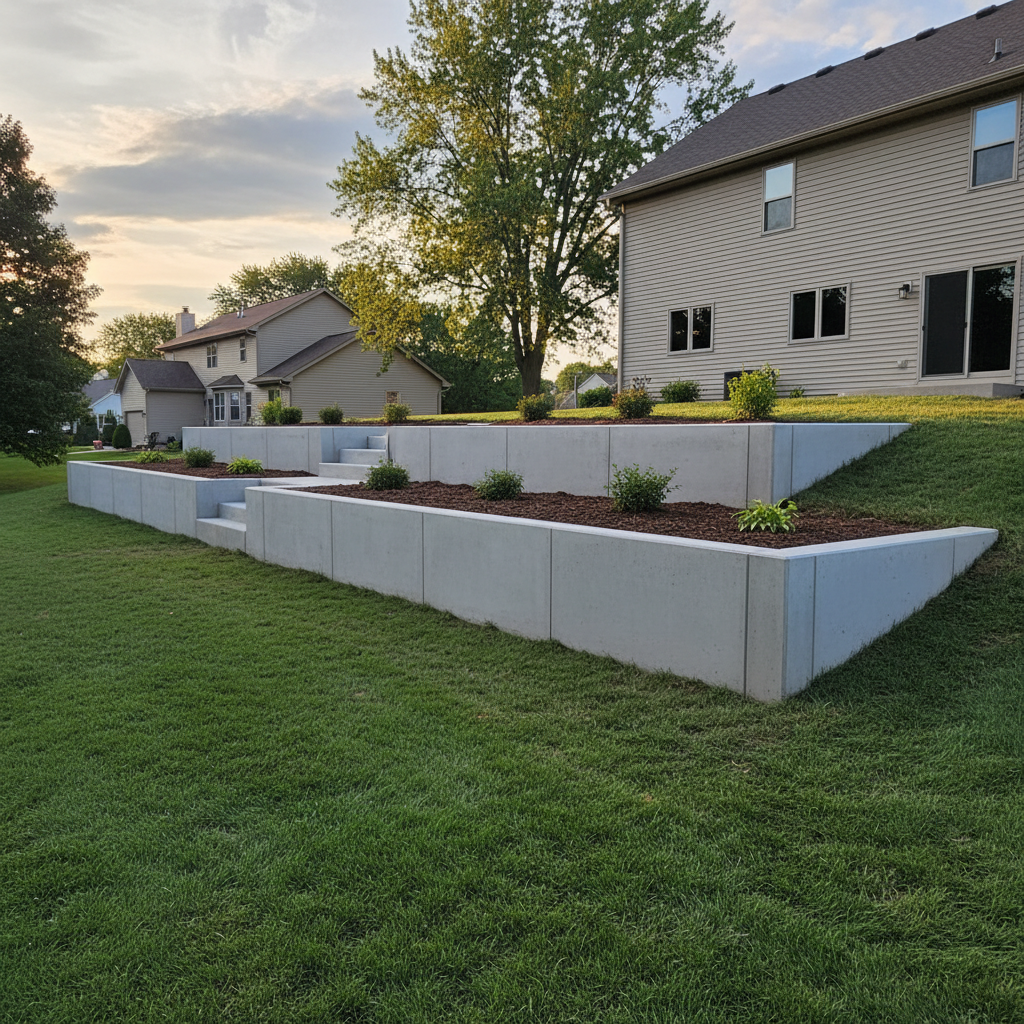
What's the Deal with Retaining Wall Costs?
You're probably thinking, "How much is this really going to cost me?" That's a fair question, and honestly, I hear it all the time. Building a concrete retaining wall isn't like grabbing a gallon of milk; there's a lot that goes into the final price. It's not just about the concrete itself, you know? We're talking design, digging, drainage, materials, labor, and all sorts of other stuff that can really change the final number.
Here in Wheaton, we see a lot of properties with different grades, especially in some of those older neighborhoods with big, established trees and rolling yards. So, a retaining wall often isn't just for looks. No, it's usually a must-have to stop erosion, carve out some usable space, or handle water runoff. And with our freeze-thaw cycles, particularly after a really rough winter like we sometimes get, you absolutely need a wall that's built tough. Trust me, trying to save a few bucks here will only cost you more down the road.
What Makes the Price Tag Go Up or Down?
Alright, let's get down to brass tacks. When I'm putting together a quote for a retaining wall, I'm looking at a few key things:
- Wall Size and Height: This one's pretty obvious. A small, two-foot high garden wall is going to be way cheaper than an eight-foot structural wall holding back a whole hillside. The taller and longer the wall, the more materials, rebar, and work it'll need.
- Material Type: You asked about concrete, which is usually our specialty here at Paradise Concrete Co. But even within concrete, you've got choices. Poured concrete, concrete blocks (like those segmental retaining wall blocks), or even decorative stamped concrete finishes will all have different price points. Poured concrete, when it's done right, is incredibly strong and lasts forever.
- Site Accessibility: Can we get our equipment in there without a major hassle? If we're hauling materials through a super narrow gate, over delicate landscaping, or working on a steep slope, it just takes more time and effort. And yep, that adds to the labor costs.
- Excavation & Earthwork: This is a big one. If we need to dig out a ton of dirt, pull up old landscaping, or deal with tricky soil conditions (like some of the clay we've got around here), that's a significant chunk of the job. Proper digging and backfilling are absolutely critical for the wall's stability, by the way.
- Drainage Requirements: You simply cannot skip proper drainage behind a retaining wall. Water pressure is basically a wall's worst enemy. We'll typically put in a perforated pipe, gravel, and filter fabric. More complex drainage solutions, especially for bigger walls or areas with serious water problems, will naturally add to the cost.
- Permits & Engineering: For taller or more complicated walls, you'll probably need a permit from the City of Wheaton, and maybe even an engineer's design. This isn't just bureaucracy; it makes sure the wall is safe and meets all the local rules. These costs are usually separate, but totally necessary.
Typical Cost Ranges in Wheaton
I know you want actual numbers, so let's talk real dollars. For a standard, functional concrete retaining wall – let's say, 3 to 6 feet high – you're generally looking at anywhere from $40 to $80 per square foot of wall face. That's a pretty wide range, isn't it? And that's because of all those factors I just ran through.
For instance, a straightforward, 4-foot high, 50-foot long poured concrete wall with easy access and basic drainage might land on the lower end, maybe $8,000 to $12,000. But if you've got a really tricky site, need a lot of digging, or want a decorative finish for a 6-foot high, 75-foot long wall, you could easily be looking at $25,000 to $40,000 or even more. These aren't exact quotes, just realistic ranges based on what I've seen around town, okay?
Remember, these numbers usually cover excavation, materials, rebar, labor, and basic drainage. They typically don't include extensive landscaping restoration, complex engineering fees (beyond the basic design), or special finishes unless we specifically mention them.
What Should Be in Your Quote?
When you get a quote from Paradise Concrete Co. or any other good contractor, make sure it's detailed. It should clearly spell out:
- The wall's linear footage and height.
- What type of concrete and finish.
- The scope of excavation and backfill.
- Details about the drainage system (like perforated pipe, gravel, fabric).
- The rebar schedule and reinforcement.
- Who's responsible for pulling permits.
- A timeline for the project.
- The payment schedule.
- Warranty information.
If a quote is just a single number scribbled on a napkin, honestly, just walk away. You really need to understand what you're paying for.
How to Avoid Overpaying
Nobody wants to get ripped off. Here's my best advice:
- Get Multiple Quotes: Don't just go with the first person you talk to. Get at least three detailed bids from local, reputable contractors. This helps you compare apples to apples, as they say.
- Check References & Reviews: See what other Wheaton homeowners have to say about their work.
- Ask Questions: If something in the quote isn't clear, just ask. A good contractor will take the time to explain it all.
- Don't Always Go for the Lowest Bid: The cheapest option often means cut corners, and that's the absolute last thing you want with a retaining wall. You want quality that actually lasts.
- Understand the Warranty: What happens if there's a problem a year down the road? Make sure you're covered.
A well-built concrete retaining wall is a pretty big investment, one that adds real value and function to your property. Do your homework, ask the right questions, and pick a contractor who truly knows their stuff. You'll be glad you did.