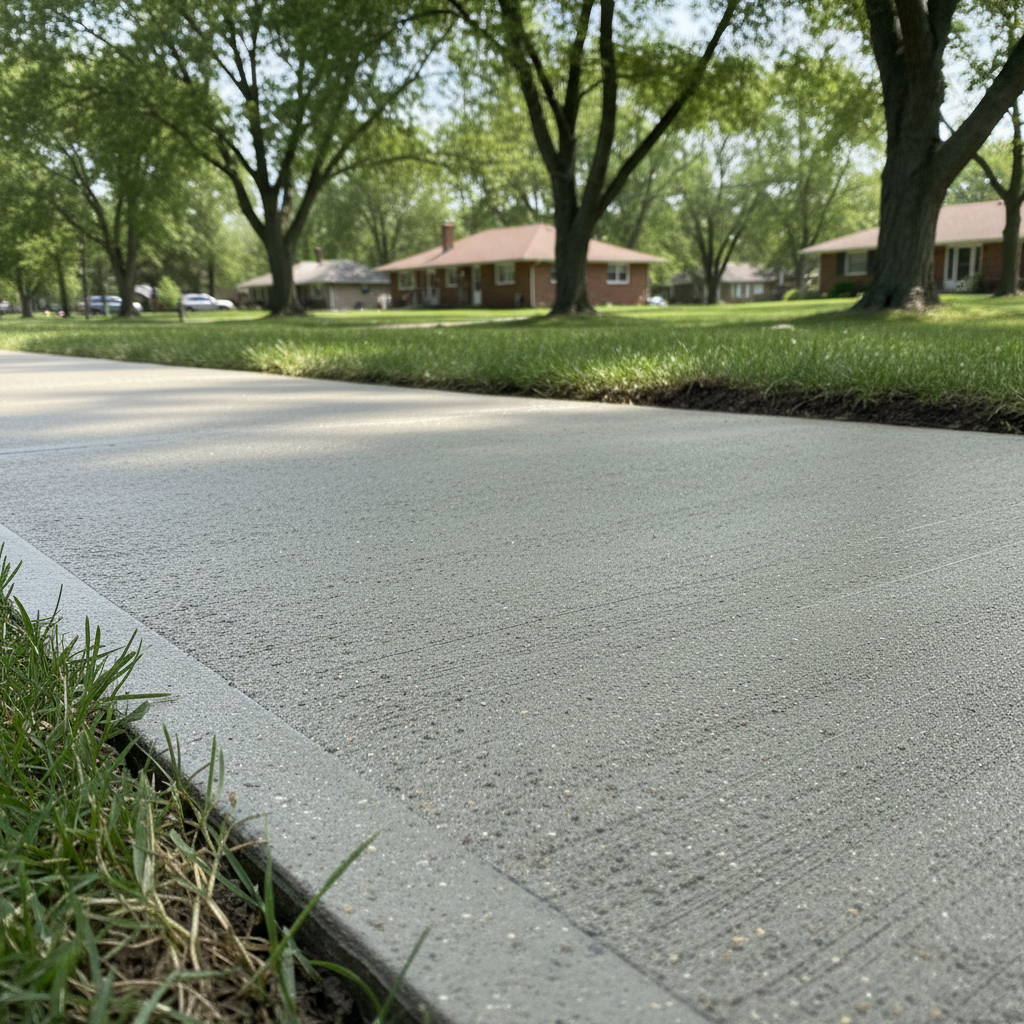
Concrete sidewalks take a beating around Wheaton, IL. Between our heavy clay soils, wet springs, and the constant freeze-thaw cycles we get every winter, Concrete Sidewalks do not stay pristine for long. Over the years running Paradise Concrete Co, our team has heard just about every question a homeowner can ask about Concrete Sidewalks, pathways, and front walks. Here are straight answers to the questions that come up the most for Concrete Sidewalks in Wheaton, IL.
Do I need a permit to replace the sidewalk in front of my house?
That depends entirely on where the concrete sits. If the Concrete Sidewalk is part of the public right-of-way, which is usually that strip near the street where the city technically has an easement, you will need a permit from the City of Wheaton before any work starts. Contractors working in the right-of-way also have to be registered, bonded, and insured with the city. On the other hand, a private Concrete Sidewalk running strictly from your front porch to your driveway does not require a city permit. Paradise Concrete Co always recommends double-checking boundaries before renting a breaker or hiring someone for Concrete Sidewalks work.
Why is my sidewalk sinking on one side?
Blame our local soil conditions. Wheaton has plenty of heavy, expansive clay that holds onto moisture. When it freezes, the ground swells up; when it dries out in July and August, it shrinks. That constant movement creates voids underneath the slabs of Concrete Sidewalks. Once a small pocket forms beneath the concrete, foot traffic and winter weight cause the slab to drop into it. Poor compaction back when the house was built is usually the root culprit for a sinking Concrete Sidewalk in Wheaton, IL.
Should I mudjack my sidewalk or just replace it?
It comes down to structural integrity. If the slab of your Concrete Sidewalk is sitting level and solid except for a minor drop or tilt, mudjacking or poly-jacking is a great way to pump material underneath and lift it back to grade for a fraction of the cost. But if the concrete is fractured into multiple pieces, crumbling at the control joints, or severely spalled from salt damage, lifting it is a waste of money. At that point, full Concrete Sidewalk replacement is the only real fix for homeowners in Wheaton, IL.
How thick should a residential sidewalk be?
Four inches is standard for standard foot traffic, and that is what Paradise Concrete Co typically pours for residential Concrete Sidewalks. However, if that Concrete Sidewalk crosses over a driveway approach where cars might accidentally hop the curb or park tires on the edge, you need to bump it up to six inches with proper stone sub-base compaction. Skimping on thickness there means watching your Concrete Sidewalk snap the first time a delivery truck cuts the corner too sharp.
How long do I have to wait before walking on new concrete?
You can usually walk on a fresh Concrete Sidewalk after about 24 to 48 hours, depending on the weather. Hot, dry summer days speed up curing, while cool damp autumn days slow it way down. Just keep in mind that walking on a Concrete Sidewalk and driving a heavy load over it are two entirely different things. Keep wheeled carts, heavy equipment, and definitely cars off new Concrete Sidewalks in Wheaton for at least a week.
How do I keep winter salt from destroying the surface?
Salt is brutal on new concrete. Never use rock salt or chemical de-icers on a Concrete Sidewalk during its first winter season because the concrete is still curing and absorbing moisture, which makes it prone to pitting and scaling. Instead, use plain sand for traction on your Concrete Sidewalk. Once the Concrete Sidewalk is a year or two old, you can use ice melt, but avoid ammonium nitrates and ammonium sulphates entirely because they chemically break down the cement paste. A quality breathable sealer applied every couple of years also goes a long way toward blocking moisture intrusion for Concrete Sidewalks in Wheaton, IL.