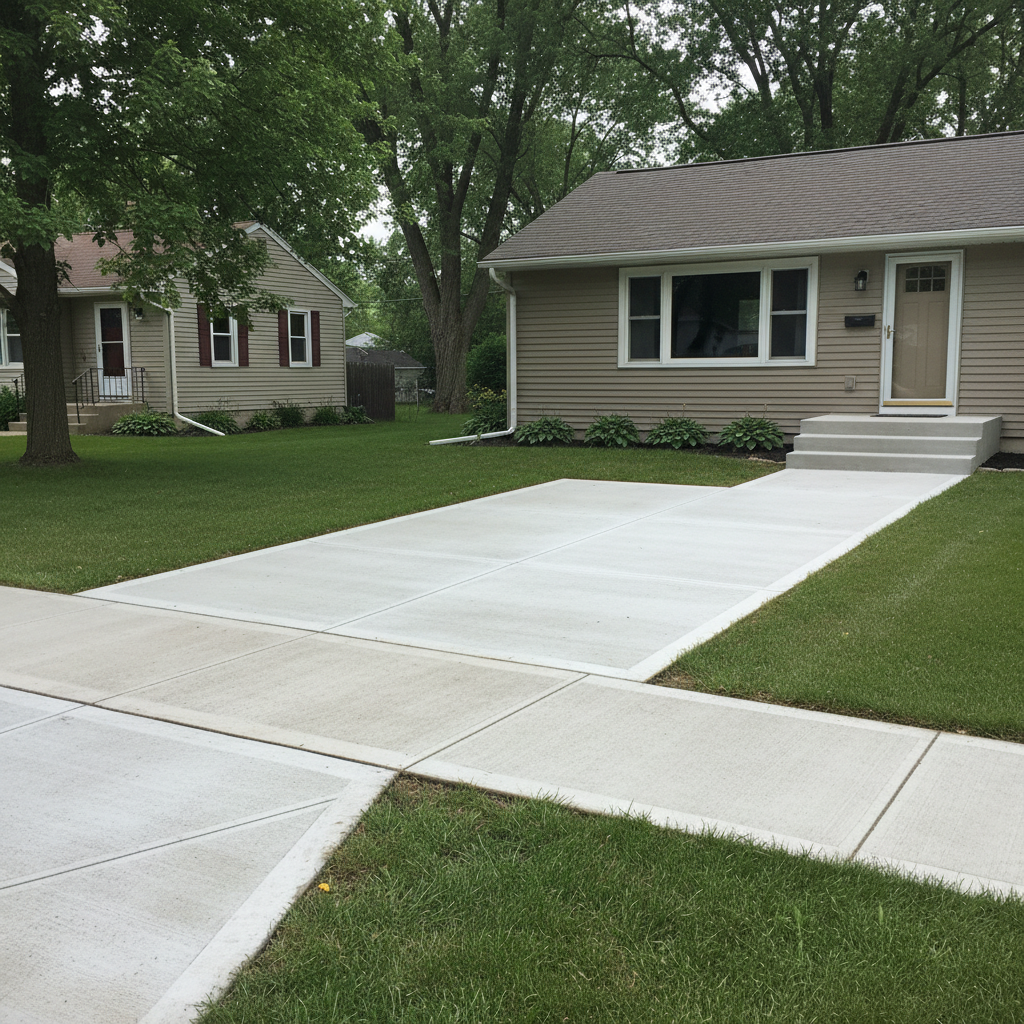
Alright, let's talk about what concrete repair actually costs right here in Wheaton. If you're dealing with a cracked driveway, a patio that's seen better days, or maybe a sidewalk that just feels wobbly underfoot, you're probably wondering what kind of dent it's going to make in your wallet. I've been doing this for a long time with Paradise Concrete Co, and honestly, I've seen just about everything. Our crazy Illinois weather, coupled with the clay soils we have around here, certainly keeps things interesting.
What Really Drives Concrete Repair Pricing?
There's no single, easy answer to this question, which is something most people don't realize. But a few key things really push the cost up or down. Understanding these factors will help you make sense of any quote you get from a local contractor.
- Type of Damage: Is it a tiny hairline crack, or has a whole slab started sinking? Fixing a minor crack is a lot less expensive than lifting and leveling a big section. Structural problems, like significant foundation settling, are naturally more complicated and will cost more.
- Repair Method: This is a big one. For concrete that isn't level, you've got a few choices:
- Crack Sealing/Filling: For smaller cracks, say up to about half an inch, we're talking about sealing them up. This helps stop water from getting in and causing more damage.
- Concrete Leveling (Mudjacking/Polyjacking): If a slab has settled, we can actually lift it back into place. Mudjacking uses a cement-based slurry, while polyjacking uses an expanding polyurethane foam. Polyurethane is usually more expensive, but it cures faster, is lighter, and often lasts longer, which is a real benefit.
- Resurfacing/Overlay: If the surface is spalling, pitted, or just looks rough, but the slab itself is solid, we can put a new thin layer right on top. It gives it a fresh look.
- Section Replacement: Sometimes, a section is just too far gone. It needs to be completely taken out and repoured. This means demolition, getting rid of the old material, and then bringing in new concrete.
- Size and Location of the Repair: A small crack in a sidewalk is a quick job. A large section of a driveway or an entire patio that needs lifting is a much bigger project. Accessibility also matters; if we can't easily get our equipment to the area, that adds to the labor cost.
- Site Preparation: Sometimes, we have to do extra work before we even start the actual repair. This could mean removing tree roots that caused the damage in the first place, or improving drainage. These steps aren't typically part of the base repair cost.
- Materials Used: The quality of the sealants, the specific types of leveling foam, or any decorative resurfacing materials will definitely affect the final price.
- Local Labor Rates: Wheaton is a great place to live, honestly, but labor costs here are generally higher than what you'd find in some more rural areas.
Typical Cost Ranges for Concrete Repair in Wheaton
I know you want some actual numbers, so here's what I generally see for different types of repairs right here around town:
- Minor Crack Sealing: For small, non-structural cracks, you're usually looking at $150 to $500 per crack. This is often done with polyurethane or silicone caulk, which works well.
- Concrete Leveling (Mudjacking): This method typically runs $3 to $8 per square foot. So, for a 100 sq ft section, you might pay $300 to $800. For a larger project, like a partial driveway that's 200 sq ft, it could be $650–$1,300. Most companies have a minimum charge, often $200-$300, so even a very small job might hit that minimum.
- Concrete Leveling (Polyjacking/Foam Injection): This is generally more expensive than mudjacking, ranging from $5 to $25 per square foot. A 100 sq ft section could easily be $500 to $2,500. While the material itself costs more, it's often preferred for its precision, lighter weight, and quicker cure time — something worth considering. For a 200 sq ft driveway section, you might see costs between $1,600 and $5,000.
- Surface Resurfacing: If you're just looking to refresh the appearance of a structurally sound slab, resurfacing can cost $2 to $10 per square foot. A 500 sq ft patio might range from $1,000 to $2,500 for basic resurfacing. For a residential driveway, expect $2,500 to $6,000.
- Section Replacement: When a section is truly beyond repair, expect to pay $8 to $15 per square foot. This price includes the demolition, hauling away the old concrete, preparing the base, and pouring new concrete. A 50 sq ft driveway section could be $400 to $750.
Keep in mind, these are just averages. Every single job is unique, and getting a precise estimate really requires someone to come out and look at your specific situation.
What Should a Good Quote Include?
When you get a quote from Paradise Concrete Co, or any other reputable contractor, it should be clear and detailed. Don't ever settle for just a handshake and a vague number.
- Detailed Scope of Work: Exactly what are they going to do? Is it crack filling, leveling, resurfacing, or replacement? Which areas are they addressing?
- Materials: What type of sealant, foam, or concrete mix will be used?
- Preparation: Does the quote include cleaning the area, grinding, or any base work?
- Cleanup and Disposal: Who's responsible for hauling away all the debris? This is important, especially for replacement jobs.
- Timeline: An estimated start and completion date is always helpful.
- Warranty: What kind of guarantee do they offer on their work? This shows they stand behind their service.
- Total Cost: A clear, itemized breakdown if possible, or at least a firm total.
How to Avoid Overpaying for Concrete Repair
Nobody wants to get ripped off, right? Here's my advice:
- Get Multiple Bids: This is a no-brainer. Get at least three detailed quotes. It helps you compare not just the price, but also the proposed solutions and the contractor's overall professionalism.
- Understand the Problem: Ask questions. A good contractor will explain what caused the damage and why their proposed solution is the best fix. For example, if you've got a sinking slab near your foundation, it might be because of poor drainage or our shifting local clay soils, and just patching it won't solve the underlying issue.
- Don't Automatically Go for the Lowest Bid: The cheapest option isn't always the best, generally speaking. Sometimes a lower bid means a contractor is cutting corners on materials, prep work, or experience. Look for value, not just the lowest price tag.
- Check References and Reviews: See what other homeowners in Wheaton have to say about their experience with the contractor. That's always a good indicator.
- Ask About Warranties: A solid warranty shows a contractor stands behind their work.
- Be Wary of High-Pressure Sales: If someone is pushing you to sign on the spot, that's a red flag. Take your time to review the quote thoroughly.
Repairing your concrete is usually much more cost-effective than a full replacement, often saving you 50-70% of the cost. So, addressing those issues sooner rather than later helps keep your property safe and looking good, and that's not a small thing.