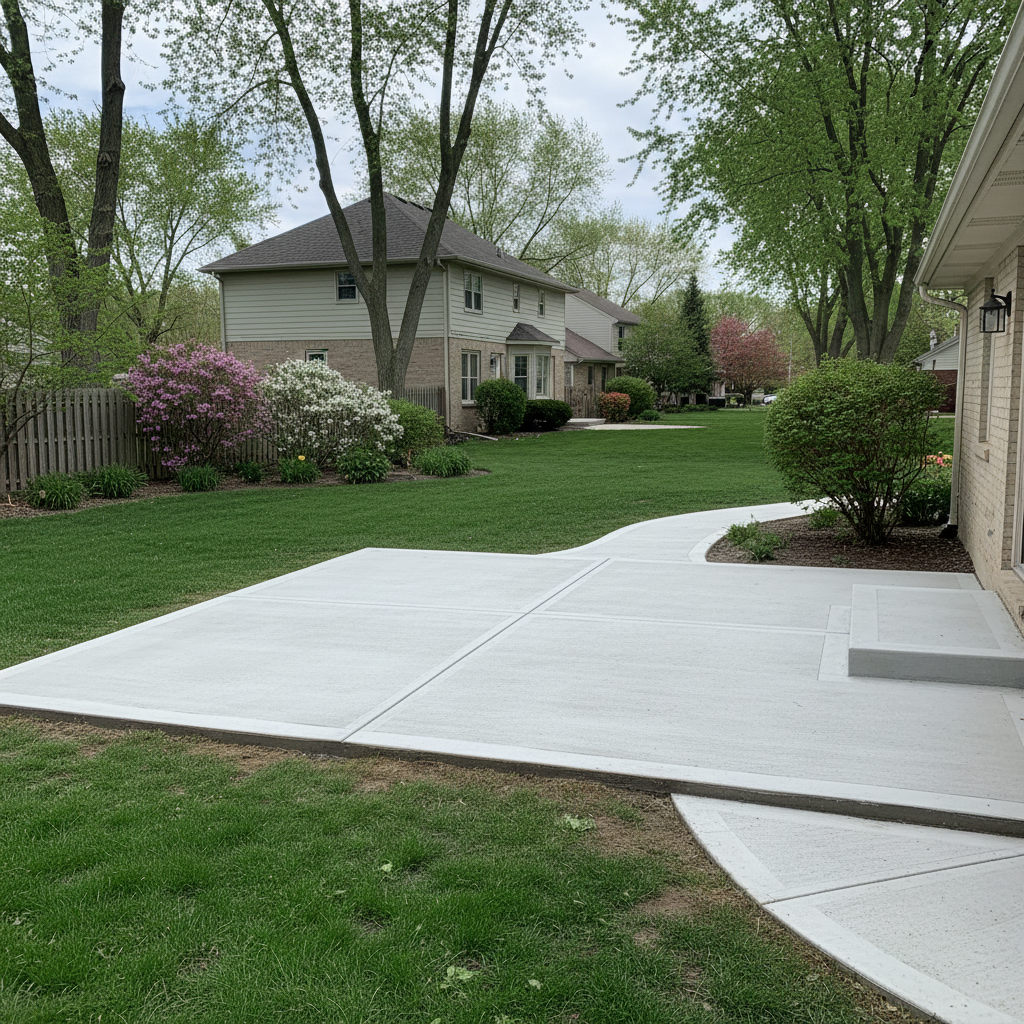
So, you're ready for that new concrete driveway, sidewalk, or patio. Maybe you've got a crumbling old one that's an eyesore, or you're finally putting in that outdoor living space you've always dreamed of. That's fantastic! But before you jump in, I've seen a lot of folks around Wheaton make some pretty common mistakes. These often end up costing them time, money, and a whole lot of frustration. Let's talk about what to avoid, shall we?
Mistake #1: Focusing Only on the Lowest Bid
Look, I totally get it. Everyone wants a good deal. But when it comes to concrete, the cheapest bid is almost never the best one. Concrete isn't like buying a gallon of milk, you know? There's a huge difference in quality and how long it'll last, depending on who's doing the work and what materials they're using. I've seen homeowners go with the lowest price, only to have their new driveway cracking or spalling within a couple of years. Then they're calling someone like Paradise Concrete Co. to rip out the bad work and do it right. That means they've paid twice, which is just a shame.
Think about what that low bid might be cutting corners on: proper sub-base preparation, the right concrete mix, adequate rebar or mesh, or even proper curing. These aren't optional steps; they're absolutely critical for a slab that lasts. A good contractor will explain their process and why their price is what it is. If someone's price seems too good to be true, well, it probably is.
Mistake #2: Not Understanding the Sub-Base
This is a big one, especially in our area. Wheaton's got a mix of soil types, and if your contractor doesn't properly prepare the sub-base – that's the ground underneath the concrete – you're asking for trouble. We've got those freeze-thaw cycles here that can really do a number on concrete if it's not supported correctly. Water gets under there, freezes, expands, and pushes your slab up. Then it thaws, and the slab settles unevenly. It's a recipe for cracks and uneven surfaces, no doubt about it.
A good contractor will excavate enough, make sure water drains away from the slab, and compact a stable granular base. They'll talk to you about it, too. If they just show up, pour, and go, that's a huge red flag. You need a solid foundation for your concrete, just like your house needs one.
Mistake #3: Ignoring Drainage and Water Management
Water is concrete's biggest enemy, second only to bad installation. I see so many projects where homeowners or even some contractors don't think enough about where the water's going to go. You don't want water pooling on your new patio or, worse, running back towards your house's foundation. This is especially true for driveways that slope towards a garage.
Your concrete project needs to be designed with a slight slope – what we call 'pitch' – to direct water away. Sometimes this means adding a channel drain or making sure the adjacent landscaping helps, not hinders, drainage. Don't assume your contractor is thinking about this; ask them directly about their plan for water runoff. It's a simple question that can save you a ton of headaches down the road, preventing basement leaks or foundation issues.
Mistake #4: Skipping the Details on Reinforcement and Control Joints
Some folks think concrete is just concrete. Pour it, smooth it, done. Not quite. For flatwork to last, it needs proper reinforcement and control joints. Reinforcement, like rebar or wire mesh, helps hold the concrete together and resist cracking, especially with heavy loads or our fluctuating temperatures. It's not just about preventing cracks, but about keeping them tight if they do form.
Control joints are those cuts you see in concrete. They're not just for looks; they're designed to create weak points where the concrete can crack in a controlled way, rather than randomly across your beautiful new surface. Without enough, or if they're cut too shallow, you'll get unsightly, unpredictable cracks. Make sure your contractor specifies the type of reinforcement and the plan for control joints. If they just say,