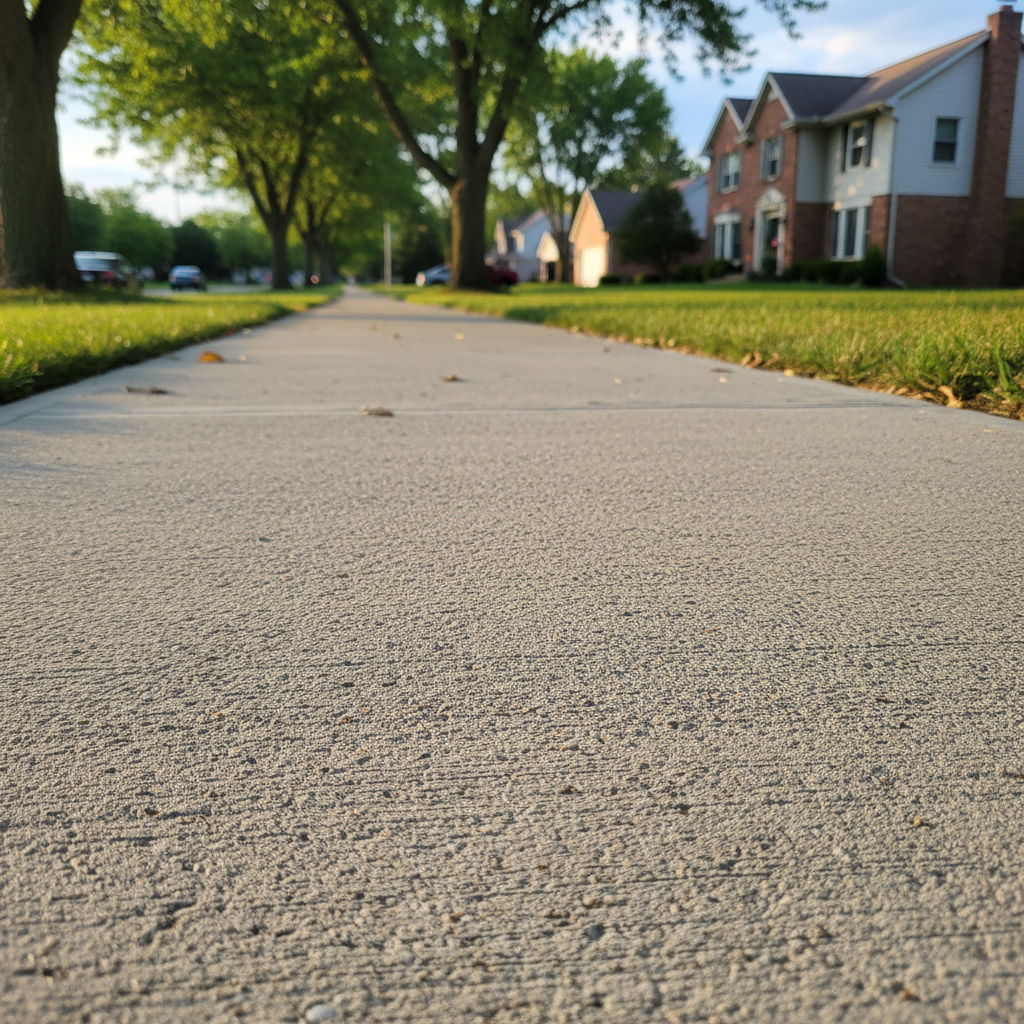
When looking at a front yard and realizing the old concrete walkway is heaving, cracking, or sinking, many questions come up. Over the years running Paradise Concrete Co around DuPage County, our team has heard just about every concern a homeowner can have regarding concrete sidewalks in Wheaton, IL. Let us tackle the questions Paradise Concrete Co gets asked the most so homeowners know what they are actually dealing with.
How thick does a residential sidewalk need to be around here?
For a standard pedestrian walkway leading up to a house in neighborhoods like College Avenue or near downtown Wheaton, four inches of solid concrete is the industry standard. Some think thicker is always better, but four inches is plenty to handle foot traffic without cracking under normal use. The catch is what goes underneath those four inches. If the base is not prepped right, even six inches of concrete will crack when the local clay soil goes through its annual freeze-thaw cycle.
Why does my concrete crack even though it is brand new?
Concrete shrinks as it cures, plain and simple. If the contractor did not cut control joints deep enough or fast enough, the concrete will crack wherever it feels like it. Here in Illinois, shifting sub-grades and moisture fluctuations add to the stress. Hairline cracks under a sixteenth of an inch are normal and usually cosmetic, but wider structural cracks mean something shifted or the mix had too much water added at the truck.
Do I need a permit from the city for a sidewalk replacement?
If your sidewalk project touches the public right-of-way—meaning the strip of concrete or parkway between your front walk and the street—yes, you need a permit from the City of Wheaton. If it is entirely private concrete winding through your backyard or private side yard, you generally do not need one. Always check before you dig or pour, because tearing out new municipal concrete because of a missed permit is an expensive problem nobody wants.
How long do I have to wait before walking on the new pour?
You can usually walk carefully on a new sidewalk after 24 to 48 hours, depending entirely on the weather. Hot summer days speed up curing, while cool, damp autumn afternoons slow it down. However, keep bikes, heavy lawn equipment, and delivery dollies off it for at least a full week. Concrete keeps gaining strength over the first month, so the longer you stay off it, the tougher the concrete sidewalk will be in the long run.
Can I just pour over my old sunken sidewalk?
Do not do it. Adding a thin layer of fresh concrete on top of old, broken concrete is a recipe for disaster. The new layer will not bond properly, and it will delaminate and flake apart within a single winter. If a section has sunk, it has to come out, the sub-base needs to be re-compacted with crushed stone, and a fresh full-depth pour needs to go in its place.
What is the best way to protect my sidewalk from winter salt?
Stay away from rock salt and harsh chemical de-icers, especially during the first winter. Chemical salts cause the surface of new concrete to pit and scale off. Use plain sand for traction instead. If you absolutely have to melt ice, look for calcium chloride-based products, and always shovel your walks promptly so water does not pool and refreeze against the edges.