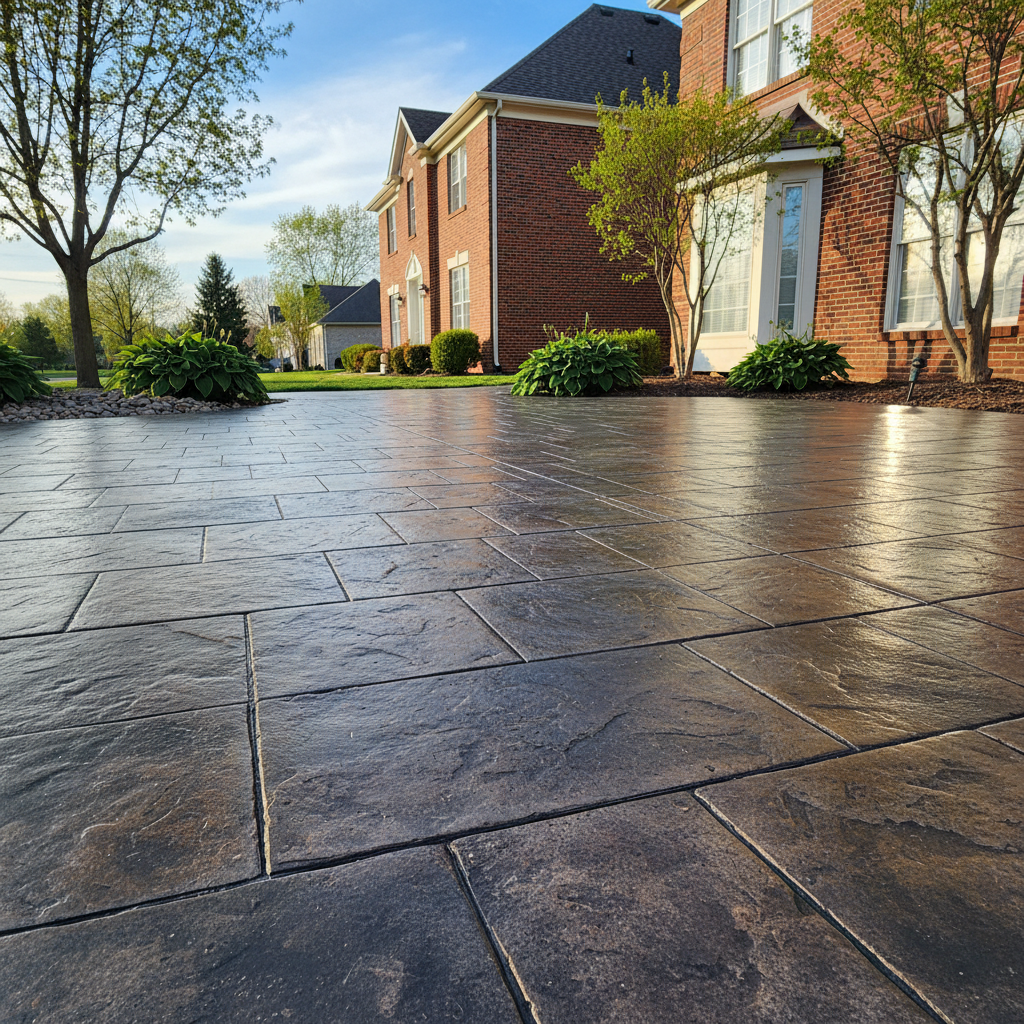
What's stamped concrete, anyway? And how's it different from the plain stuff?
Okay, let's just get this out of the way right off the bat. Stamped concrete, deep down, is still concrete. We pour it the same way we would any standard slab. The big difference? It happens while the concrete's still wet and easy to work with. Before it completely hardens, we grab some special tools – we call them stamps – and press patterns and textures right into the surface. Think of it like using a giant cookie cutter for your patio or walkway. We can make it look just like natural stone, brick, wood planks, or even slate. Regular concrete? That's just a smooth, flat gray slab. Stamped concrete gives you all that decorative flair without the higher cost and upkeep of the real materials it's mimicking.
So, what's the deal with stamped concrete cost compared to other options?
This question always comes up first, doesn't it? And it's a totally fair one. Generally speaking, stamped concrete will set you back more upfront than a simple concrete slab. You're paying for the extra bits – things like release agents and color hardeners – plus the specialized labor involved in the stamping itself. It's kind of an art form, really. But when you compare it to pavers or natural stone, stamped concrete often comes in at a lower price. You get a super durable, continuous surface that looks just like those premium materials, but you're not paying for individual stone installation or the extensive base prep that pavers sometimes demand. It's a real sweet spot for both value and looks, especially when you think about how long it lasts.
Is stamped concrete tough enough for Wheaton's crazy weather?
You bet it is. We live right here in Wheaton, so we know exactly what our winters throw at us – freezing, thawing, salt, snow plows. And our summers? They can be pretty brutal too. Stamped concrete, when installed properly by experienced folks like us at Paradise Concrete Co, is incredibly durable. The secret is all in that proper installation: a solid sub-base, the right concrete mix, and, crucially, good sealing. That sealant acts like a shield, protecting the surface from moisture, UV rays, and those de-icing chemicals. Without a quality seal, any concrete, stamped or not, becomes much more vulnerable to freeze-thaw cycles and surface spalling. We always recommend a top-notch sealer and resealing every few years to keep it looking sharp and performing well against our Illinois weather.
What kind of maintenance does stamped concrete actually need?
Maintenance is pretty easy, which is one of the big reasons people love it. For everyday stuff, a quick sweep or a hose-down is usually all it takes to keep it clean. If you've got some stubborn dirt or grime, a little mild detergent and a brush will do the trick. The most important maintenance task, like I just mentioned, is resealing. Depending on how much traffic it gets and what it's exposed to, you'll want to reseal your stamped concrete every 2 to 5 years. This isn't a huge project; you can often tackle it yourself with a roller or sprayer, or, hey, hire us to do it for you. It's a small investment that really pays off in protecting your surface and keeping those colors bright. Don't skip it!
Can stamped concrete crack? And what happens if it does?
Look, any concrete can crack. That's just how the material is. We take every single precaution to keep cracking to a minimum – things like proper control joints, the right mix design, and good curing practices. But tiny, hair-thin surface cracks can still show up over time. These are usually just cosmetic and don't mess with the structural integrity. If a bigger crack develops, repairs are definitely possible. It won't always be completely invisible, especially with really intricate patterns and colors, but we can often patch it, re-color, and reseal it to blend it in as best as we can. The key is to deal with it sooner rather than later; that stops water from getting in and making things worse, especially with our somewhat shifting, clay-heavy soils here in Wheaton.
What patterns and colors are out there?
This is where stamped concrete really gets to shine! The choices are practically endless. For patterns, you can pick from all sorts of natural stone looks like flagstone, ashlar slate, or cobblestone, plus brick patterns, wood plank textures, and even more modern geometric designs. As for colors, we can mix base colors right into the concrete itself, and then use release agents that add secondary, contrasting colors to really make the texture pop and give it depth. You can go for earthy tones that mimic natural materials, or bolder colors if you want to make a statement. We've got color charts and samples to help you picture what'll look best with your home's exterior.
How long does it take to install stamped concrete?
The timeline really depends on how big and complicated the project is. A small patio might take a few days from start to finish – that means prep, pouring, stamping, and sealing. A bigger driveway or a complex, multi-level job could easily take a week or even more. Just remember, after we pour and stamp, the concrete needs time to cure. You usually can't walk on it for at least 24 hours, and it's best to keep heavy traffic off it for several days, sometimes even a whole week, depending on the mix and the weather. We'll give you a clear timeline upfront, so you know exactly what to expect and when you can finally start enjoying your new space.