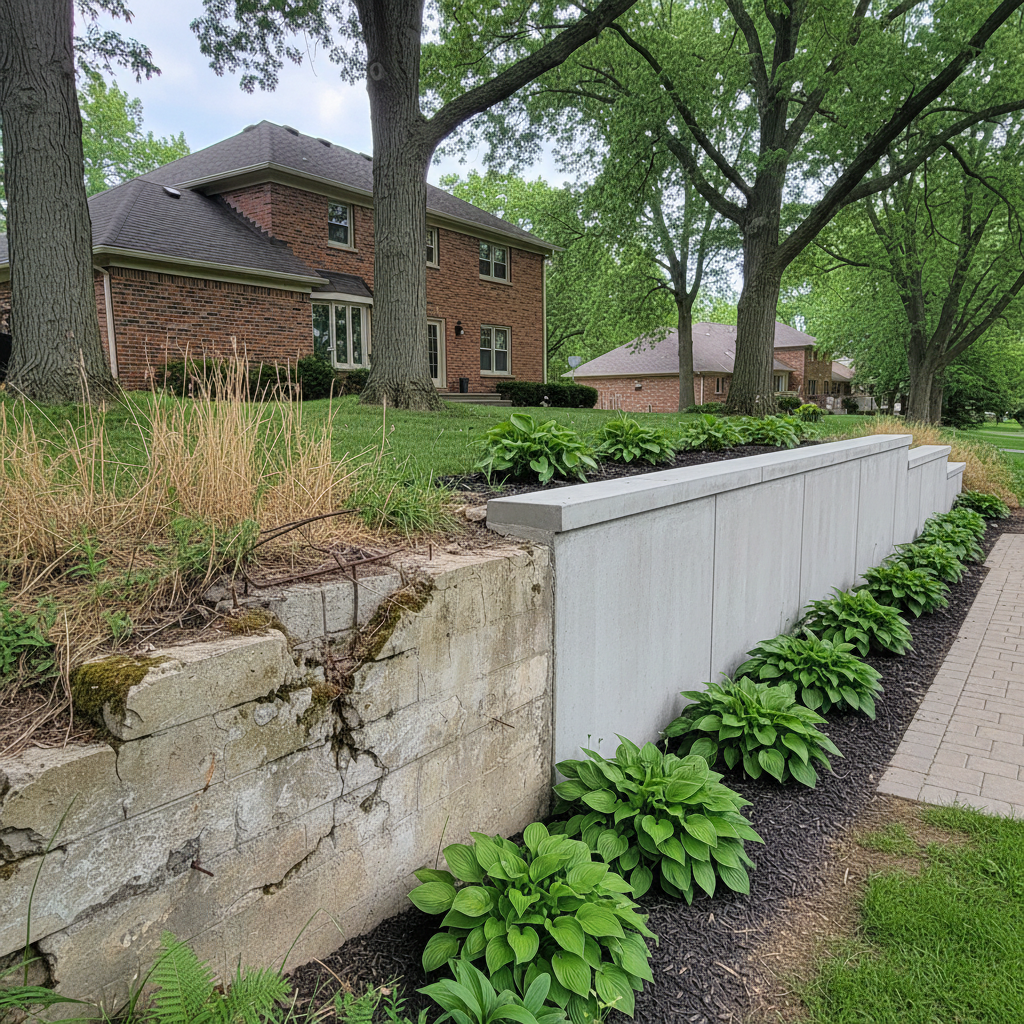
Alright, let's talk retaining walls. Maybe you've got a slope in your yard, or some erosion issues, or you just want to create some usable flat space. So you start looking into it, and pretty quickly you'll run into two main types of concrete walls: segmental block and poured concrete. Both get the job done, but they do it in different ways, and they come with their own pros and cons. As someone who's built plenty of both right here in Wheaton, I can tell you there's a clear winner in most situations, especially around here.
Segmental Block Walls: The DIY-Friendly Option
You've seen these everywhere, haven't you? They're made from individual concrete blocks, usually with a lip on the back that locks into the course below it. They're pretty popular for a reason.
Appearance: They come in a huge range of colors, textures, and styles. You can get them to look like natural stone, tumbled brick, or something more modern. For a lot of folks, this is probably their biggest selling point.
Installation: Generally, they're quicker to install than poured concrete, especially for smaller walls. No forms needed, just a good base, careful leveling, and stacking. This also means less heavy equipment on your property, which can be a plus.
Cost: Upfront, the material cost for the blocks themselves can seem lower than concrete and rebar. Installation labor might be less too, for simpler, shorter walls.
Maintenance: Pretty low. If a block gets damaged, you can usually swap it out. You might need to clean off efflorescence (those white powdery stains) sometimes, but that's about it.
Now, for the downsides. While they're great for smaller, decorative walls, they do have limitations. They rely on gravity and interlocking features for stability. For anything over a few feet tall, or if you're dealing with serious soil pressure, they start needing geogrid reinforcement, which adds complexity and cost. And honestly, I've seen more than a few block walls in older Wheaton neighborhoods start to lean or bow over time, especially if the drainage behind them wasn't perfect or the base wasn't compacted right. Our clay soils here can be tricky, expanding and contracting, which can really put stress on these walls if they're not built to handle it.
Poured Concrete Walls: The Indestructible Choice
This is where Paradise Concrete Co. really shines. When I talk about poured concrete, I'm talking about a monolithic, reinforced concrete wall. We dig a footing, set up forms, place rebar, and pour concrete. It's a different beast entirely.
Durability & Strength: This is the big one. A properly engineered and poured concrete wall, with steel rebar reinforcement, is incredibly strong. It's built to withstand immense pressure, freeze-thaw cycles (which we get plenty of here in Illinois), and just about anything else nature throws at it. It's one solid unit, not a stack of individual pieces.
Longevity: Poured concrete walls last for decades, often outliving the homes they support. They don't shift, bow, or lean when done right. You're building something that's truly permanent.
Versatility: While they might seem plain, poured concrete walls can be finished in many ways. You can get them stamped to look like stone, brick, or wood. You can stain them, paint them, or face them with stone veneer later. The structural integrity is there, and the aesthetic can be added on top.
Maintenance: Almost zero. Once it's cured, you're pretty much done. No individual blocks to worry about shifting or cracking.
Of course, there are trade-offs. The initial cost is generally higher. There's more labor involved in digging footings, setting forms, and pouring. It's also a messier process with more heavy equipment. And once it's poured, it's there. No easy changes. But for what you get in return – unmatched strength and reliability – it's often worth every penny.
My Recommendation for Wheaton Homeowners
Look, if you're building a small, purely decorative garden border that's only a foot or two high, a segmental block wall is probably fine. It's a good DIY project, and it'll look nice. But if you're dealing with any significant grade change, soil retention, or if you want a wall that you absolutely never have to worry about again, go with poured concrete. Especially with the way our ground freezes and thaws around here, that monolithic strength and proper footing depth are critical.
I've seen too many block walls fail prematurely because they weren't designed for the real forces at play, or because the base wasn't perfect. Poured concrete, when done by experienced pros like us, gives you that bulletproof solution. It's an investment, sure, but it's an investment that pays off in durability, stability, and not having to fix it again in ten years. You build it once, you build it right, and you don't think about it again.