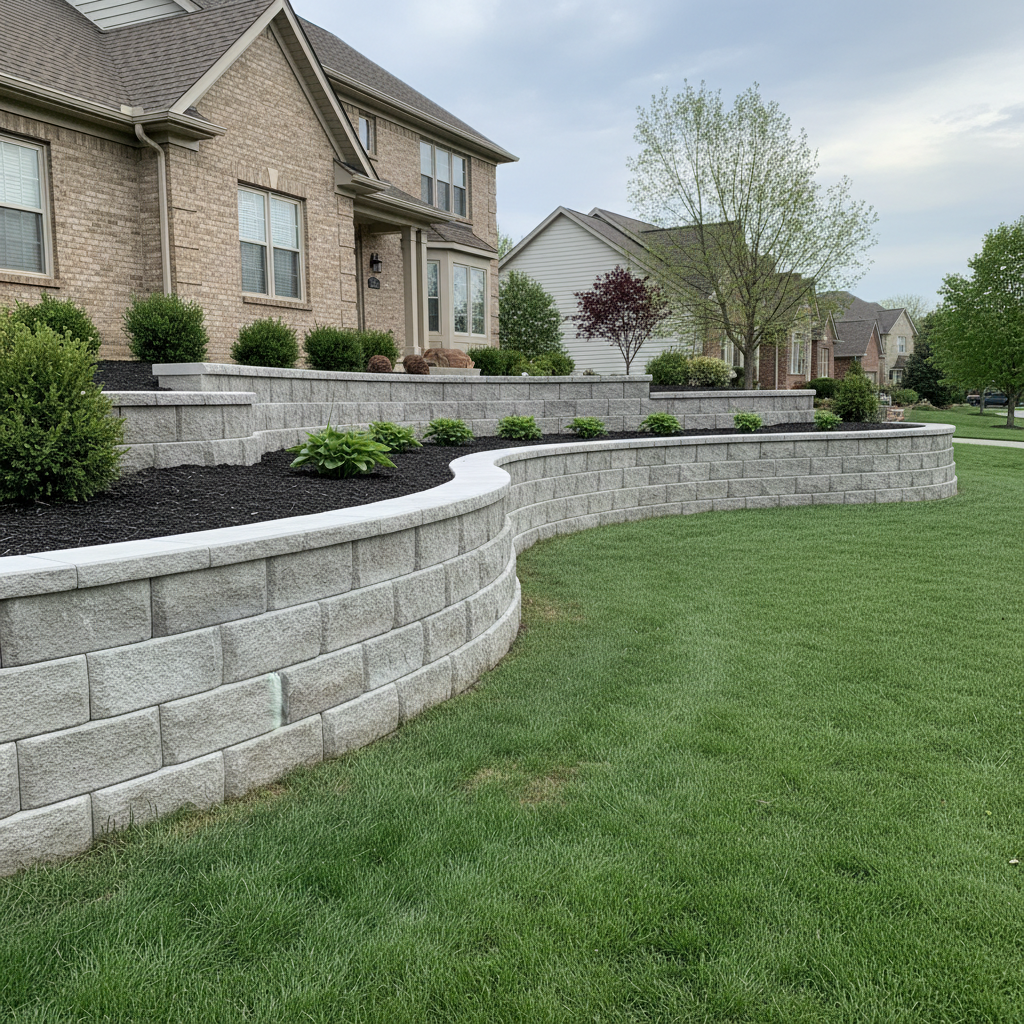
You need a retaining wall. Maybe your yard slopes too much, or you're trying to create some usable flat space. A concrete retaining wall is a solid choice, built to last. But I've seen plenty of folks around Wheaton make some real head-scratching mistakes when they're planning these projects or picking a contractor. And trust me, a bad retaining wall isn't just an eyesore; it can be a structural nightmare.
Mistake #1: Skipping the Site Prep & Drainage Plan
This is probably the biggest one, and it's where a lot of contractors cut corners to give you a low bid. A retaining wall isn't just a stack of blocks or poured concrete. It's holding back tons of soil and water. If you don't properly prepare the foundation – I'm talking about a solid, level footing that's deep enough – and if you don't plan for drainage, you're asking for trouble. Water is the enemy of any retaining wall. It builds up hydrostatic pressure behind the wall, pushing it outward. You'll see bulging, cracking, or even total collapse.
We always install a perforated drain pipe (often called a 'French drain') behind the wall, surrounded by gravel, and make sure it has a clear path for water to escape. Backfilling with the right material, not just whatever dirt got dug up, is crucial too. If a contractor doesn't talk about drainage or proper footings, that's a massive red flag. They're either inexperienced or trying to save a buck at your expense.
Mistake #2: Underestimating the Engineering
For anything more than a small garden wall, you're dealing with serious forces. In Wheaton, especially with some of the older homes on sloped lots near the prairie path or areas with heavier clay soil, you can't just guess. A wall over a certain height (often 4 feet, but check local codes) usually requires an engineer's stamp on the plans. This isn't just bureaucracy; it's about safety and longevity.
An engineer will calculate the soil pressure, the wall's height, the surcharge (any weight on top of the soil behind the wall, like a patio or driveway), and design the wall accordingly. This might mean specific rebar placement, thicker concrete, or a wider base. If your contractor says,