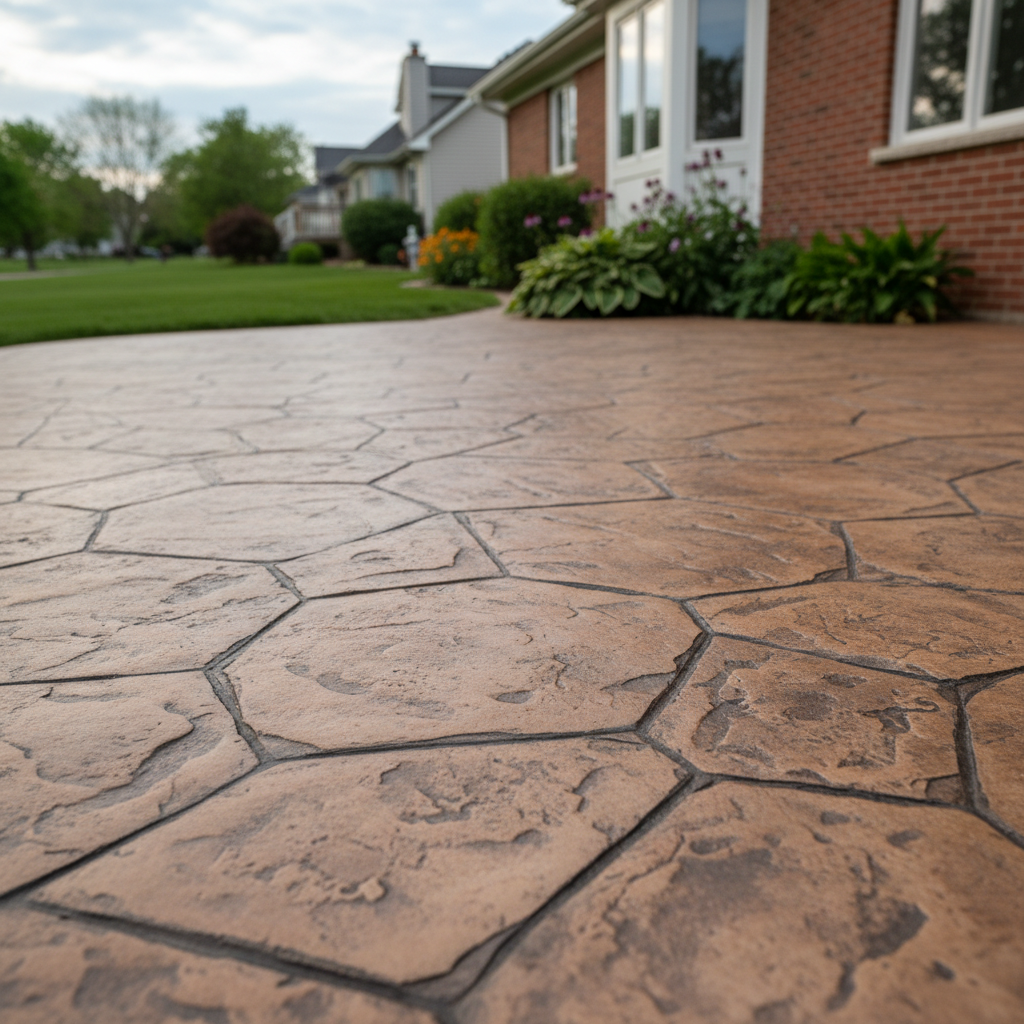
What exactly is "decorative concrete"?
When folks talk about decorative concrete, they're usually referring to concrete that's been enhanced in some way to look better than your plain old gray slab. It's not just for driveways anymore. We're talking about things like stamped concrete that mimics stone or brick, stained concrete that gives you rich, translucent colors, or even just colored concrete where the pigment is mixed right into the batch. The idea is to make concrete an aesthetic feature, not just a utilitarian surface. It's super versatile, and we've done all sorts of cool projects with it right here in Wheaton, from patios to interior floors.
Is decorative concrete more expensive than regular concrete?
Yeah, generally it is. You're adding extra steps, specialized materials, and skilled labor to the process. Think about it: stamping requires patterns and tools, staining involves specific acids or dyes and careful application, and even colored concrete means adding pigments that cost more than just plain cement. It's not just pouring and finishing; it's an artistic process. You're paying for the look, the durability, and the craftsmanship that goes into making it beautiful. But when you compare it to materials like natural stone, pavers, or high-end tile, decorative concrete can often be a more cost-effective option in the long run, especially considering its longevity.
How long does decorative concrete last, especially with our Wheaton weather?
That's a great question, and it's a big one for us here in the Midwest. Our freeze-thaw cycles are brutal on concrete. A properly installed and maintained decorative concrete surface should last just as long as, if not longer than, regular concrete – we're talking decades. The key is proper installation. That means good sub-base preparation, the right concrete mix for our climate (air-entrained, of course), and correct sealing. The sealers we use for decorative concrete not only enhance the color and protect against stains but also provide an extra barrier against moisture penetration, which is what really causes damage during winter. You'll need to reapply that sealer every few years, but it's a small price to pay for the protection it offers against those harsh Wheaton winters.
Can you put decorative concrete over an existing concrete slab?
Sometimes, but it depends entirely on the condition of the existing slab. If your old concrete is structurally sound, without major cracks, significant heaving, or crumbling, then yes, we can often apply an overlay. These overlays are special polymer-modified cementitious products that can be stamped, stained, or colored. It's a great way to refresh an old patio or walkway without the cost and hassle of a full tear-out. However, if the existing slab has serious issues – deep cracks, settling, or widespread spalling – then an overlay won't fix the underlying problem. In those cases, a full removal and replacement is usually the only way to get a durable, long-lasting result. We'll always give you an honest assessment during an on-site visit.
What kind of maintenance does decorative concrete need?
It's pretty low maintenance, which is one of its big selling points. The main thing is keeping it clean and reapplying a sealer. For cleaning, a simple sweep and occasional washing with a hose or a mild detergent is usually all it takes. For tougher spots, a pressure washer on a low setting can work, but be careful not to blast away the sealer. The most important maintenance task is resealing. For outdoor decorative concrete, especially with our climate, I usually recommend resealing every 2-3 years. Indoor decorative floors might go longer. This protects the color, prevents staining, and helps prevent surface wear. If you let the sealer wear off completely, your concrete is more vulnerable to damage and fading. Paradise Concrete Co. can help you with resealing if you'd rather not tackle it yourself.
Will decorative concrete be slippery when wet or icy?
This is a common concern, and it's a valid one, especially for stamped concrete that has a textured pattern. Most decorative concrete sealers, when applied, create a smooth, somewhat glossy finish. To address slipperiness, especially in outdoor applications like driveways or pool decks, we always add an anti-slip additive to the sealer. It's usually a fine grit or polymer that creates a subtle texture without changing the look of the concrete. This significantly increases traction. For areas that get a lot of ice, like a north-facing walkway in a shaded part of town, you'll still need to use appropriate de-icing methods, but the anti-slip additive definitely helps prevent slips when it's just wet.